
You have no items in your shopping cart.
When the Ground Gives Way
Natural ground subsidence occurs when the earth’s surface sinks or settles due to geological factors, changes in groundwater levels or the application of exceedingly heavy temporary loads.
When subsidence happens, the stress transferred to the materials and structures above is immense. However, the resulting damage typically manifests in two distinct ways. For site engineers and project managers, understanding what is the difference between surface degradation and bulk degradation? is crucial for accurately diagnosing the site issue and selecting the correct remedy.
Diagnosing and Mitigating Degradation
To prevent structural issues, you must identify the type of degradation occurring and apply targeted, load-bearing surface management solutions.
Surface Degradation Explained
Surface degradation refers to the breakdown of the uppermost layer of a material or ground surface. This is typically caused by direct environmental exposure, such as weathering, UV radiation, chemical spills or consistent abrasive traffic from heavy construction machinery.
While surface degradation might initially look like a minor cosmetic issue, if left untreated, it allows water and hazardous chemicals to penetrate deeper into the substrate, accelerating overall failure.
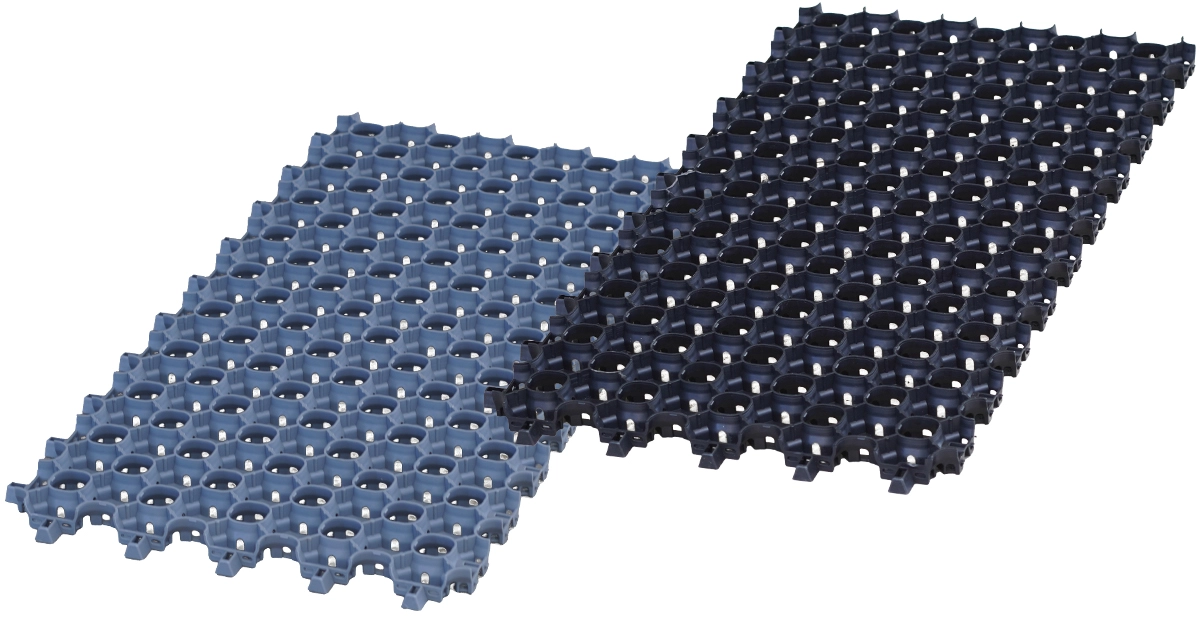
TrexPave and TrexLok Grid
Bulk Degradation Explained
Bulk degradation is far more severe and structurally dangerous. This occurs when the entire mass or core volume of the material or ground structure structurally breaks down.
In the context of natural ground subsidence, as the soil sinks, the structural layers above lose their fundamental support. This causes bulk degradation, where the core integrity of the material is completely compromised, leading to deep cracking, load-bearing failure and potential collapse.
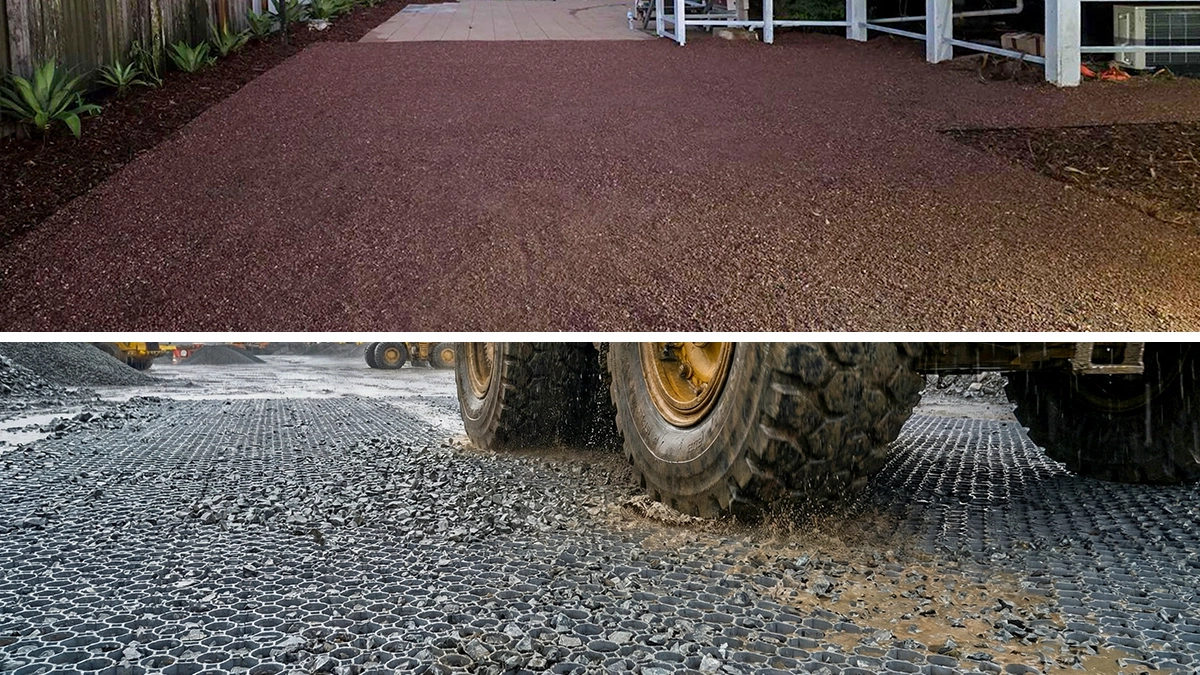
TrexPave above and TrexLok below Applications.
Surface vs. Bulk Degradation: A Quick Comparison
To accurately diagnose and treat site instability, engineers must distinguish between these two failure modes:
| Feature | Surface Degradation | Bulk Degradation |
|---|---|---|
Primary Cause |
Weathering, UV, chemical spills, abrasive traffic |
Natural subsidence, deep soil settlement, and core stress |
Visible Signs |
Spalling, top-layer cracking, rutting, delamination |
Deep fissures, significant uneven settling, and material collapse |
Consequences |
Allows moisture ingress, tripping hazards, and aesthetic damage |
Total structural failure, severe safety risks, high cost |
Remedy |
Surface sealing, protective top layers, and minor patching |
Deep ground stabilisation, load distribution systems, and engineered sub-bases |
Severity |
High risk over time if ignored |
Immediate critical structural risk |
Implications for Product Selection
Subsidence directly accelerates both types of degradation. If your site is prone to sinking or shifting, standard rigid surfaces will inevitably break down under the stress.
Your product selection must account for this inevitable movement. Site engineers need ground stabilisation systems that disperse heavy loads and accommodate minor ground shifts without suffering bulk degradation. Failing to specify a dynamic, load-bearing solution guarantees that temporary fixes will fail, leaving your project exposed to catastrophic structural breakdown and severe budget blowouts.
The Ultimate Surface Management Solution
To combat ground instability and prevent material failure, you need a system engineered for absolute resilience. An ideal stabilisation solution must offer exceptionally high load capacity, enable rapid water drainage to prevent further soil weakening, and interlock to distribute heavy dynamic loads across sinking ground.
The Trex Ground Stabilisation System satisfies all these rigorous engineering requirements. Made from 100% recycled polypropylene, the interlocking grid system provides a filled crush resistance of 1,000 tonnes/m² (with unbound material) and up to 7,000 tonnes/m² when filled with concrete. Furthermore, it maintains up to 95% permeability, effectively managing the stormwater that often exacerbates natural subsidence.
It provides exceptional load distribution, interlocking securely to prevent surface degradation while protecting the bulk layers beneath from subsidence-related stress and heavy machinery traffic.
Key Takeaways
- Natural ground subsidence shifts loads unexpectedly, leading to severe and costly material stress.
- Surface degradation affects the exterior top layer due to weathering and traffic, while bulk degradation completely compromises the core structural integrity of the material.
- Selecting inflexible products on subsiding ground guarantees failure. You must specify engineered dynamic stabilisation solutions to prevent structural breakdown.

