
You have no items in your shopping cart.
Why Low Surface Cover is a Liability
Research indicates that erosion risk is significantly reduced once a site achieves at least 30% soil cover. When the cover falls below this critical threshold, the site essentially becomes an environmental liability. Bare soil lacks the friction required to slow down water, meaning rainfall quickly transforms into high-velocity runoff.
For the site, this means the loss of valuable topsoil and the rapid development of rill and gully erosion. Beyond the physical damage, this causes major operational problems. Sediment-laden water can breach site boundaries and enter local water catchments, leading to heavy environmental fines and potential project shutdowns. On top of that, unstable ground increases the risk of bogged machinery and unsafe working conditions for onsite personnel.
Strategies for Short-Term Mine Rehabilitation
For active sites where heavy machinery and high traffic prevent natural growth, physical barriers provide the most reliable protection. A Cement Blanket Erosion Control is a high-performance solution for these areas. These blankets create an immediate, durable armour that binds to the substrate, which is especially effective on steep batters and high-velocity drainage channels where traditional methods might wash away during a storm event.
Stability for Heavy Traffic and Industrial Access
Standard erosion controls often fail in high-traffic areas where surface integrity is critical to site operations. In mining and construction environments, the Trex Ground Stabilisation System (specifically TrexLok) provides the necessary reinforcement. Unlike loose hardstands, TrexLok uses modular, interlocking grids that lock fill in place and spread heavy machinery loads evenly. This prevents rutting and washouts, maintaining reliable access throughout the project without the need for full concrete pavements.
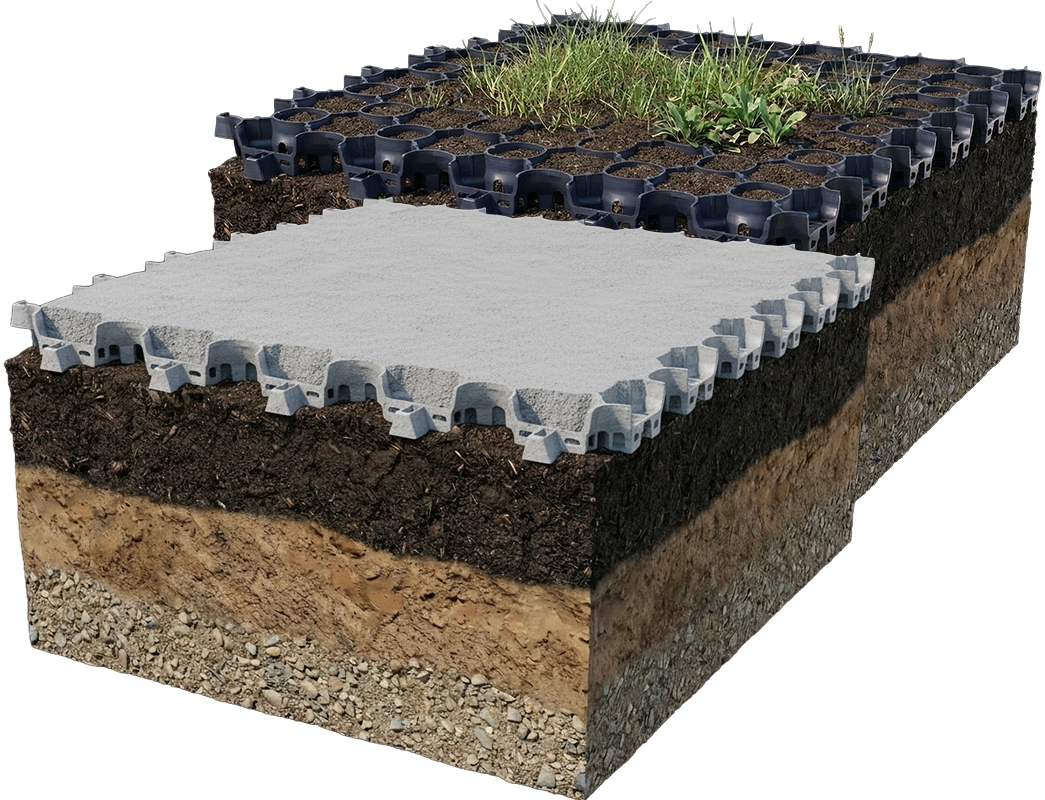
TrexPave and TrexLok works with multiple surface finishes. Allowing you to meet design and site requirements. Same grid. Different outcomes.
Strategies for Long-Term Mine Rehabilitation
As active mining operations conclude or specific land parcels are decommissioned for restoration, the focus shifts from temporary site protection to permanent landscape recovery. Successful mine rehabilitation depends on the transition from mechanical stabilisation to biological stability. The goal is to establish a self-sustaining ecosystem where plant roots provide the primary reinforcement for the soil.
During the early stages of revegetation, seeds and young plants are highly susceptible to being washed away. Coir Mesh serves as a protective layer that holds the seed and soil in place while allowing sunlight and water to reach the ground. As a 100% biodegradable product, the mesh eventually breaks down and enriches the soil with organic matter, supporting the long-term health of the new vegetation. This method is essential for batters and embankments where the angle of the slope makes natural establishment difficult.
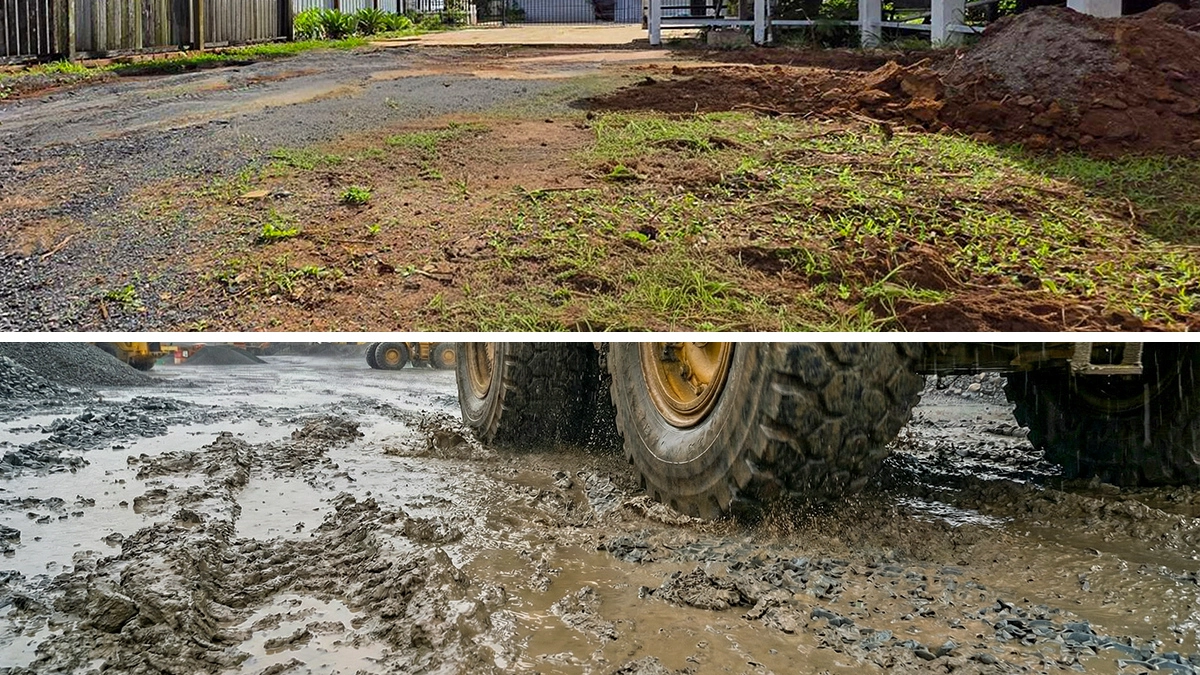
TrexLok interlocking grids spread heavy vehicle loads evenly, preventing rutting and surface failure on access tracks.
Best Practices for Site Compliance
Effective erosion control is not just about the products used; it is about the timing and coordination of the strategy. Implementing these controls early in the project lifecycle reduces the need for expensive earthwork repairs later.
- Disturb minimal areas: Only clear the land that is absolutely necessary for the current phase of work.
- Divert upslope water: Use diversion banks to move clean water around disturbed areas.
- Install sediment barriers: Always place silt fences or coir logs downslope of work zones.
- Monitor and maintain: Inspect all erosion control structures after significant rain events to ensure they remain functional.

