
You have no items in your shopping cart.
How Unstable Ground Leads to Erosion
Ground stabilisation is the process of modifying the properties of soil to improve its strength, durability, and drainage. When soil is weak or disturbed during excavation, it loses its natural ability to resist the forces of wind and water. This is particularly common in reactive soils or areas with high clay content, where moisture changes cause significant volume shifts.
Without proper stabilisation, rainfall doesn't just sit on the surface; it carries the soil with it. This creates a cycle where runoff concentrates, develops into an erosive force, and carves out gullies or undermines foundations. On active sites, this leads to sediment runoff entering local waterways, which can result in heavy fines and significant remediation costs. Early intervention with mechanical or chemical binders is often the most cost-effective way to prevent these issues before they escalate.
Why Soil Stabilisation Methods Matter
The primary goal of stabilisation is to increase the soil's load-bearing capacity while reducing its permeability and “swelling” potential. By addressing soil stability early in the project, you save on long-term costs and avoid delays caused by bogged machinery or site washouts. Effective stabilisation:
- Prevents wind and rain erosion.
- Secures batters and embankments against landslides.
- Creates a reliable, level base for formwork and heavy machinery.
- Ensures environmental compliance by trapping sediment at the source.
- Improves the long-term performance of pavements and slabs.
Physical vs. Vegetative Controls: Which Do You Need?
Choosing the right method to stabilise your site's soil depends on the site's conditions, slope, and expected project duration.
1. Physical and Chemical Controls (Active Construction Sites)
Physical controls are often required when immediate results are necessary or where the land is meant for building. On high-traffic sites or steep batters where natural vegetation cannot take hold quickly enough, physical barriers provide a durable crust that can withstand intense weather events.
For projects requiring rapid, high-strength protection, a Cement Blanket Erosion Control is the industry standard. These blankets act as a synthetic erosion control layer that binds to the substrate, such as soil, rock, or shale, providing stabilisation for years. This is ideal for civil projects where water flow is high and immediate ground armouring is a priority. Unlike traditional concrete spraying, these blankets are faster to install and require less equipment on site.
When you need to maintain accessibility and structural integrity under heavy traffic, the Trex Ground Stabilisation System becomes the go-to solution. This modular, interlocking pavement system reinforces ground surfaces exposed to constant vehicle loads. It locks fill in place, spreads the load evenly, and allows water to drain through, preventing the ruts and mud that typically plague active sites.
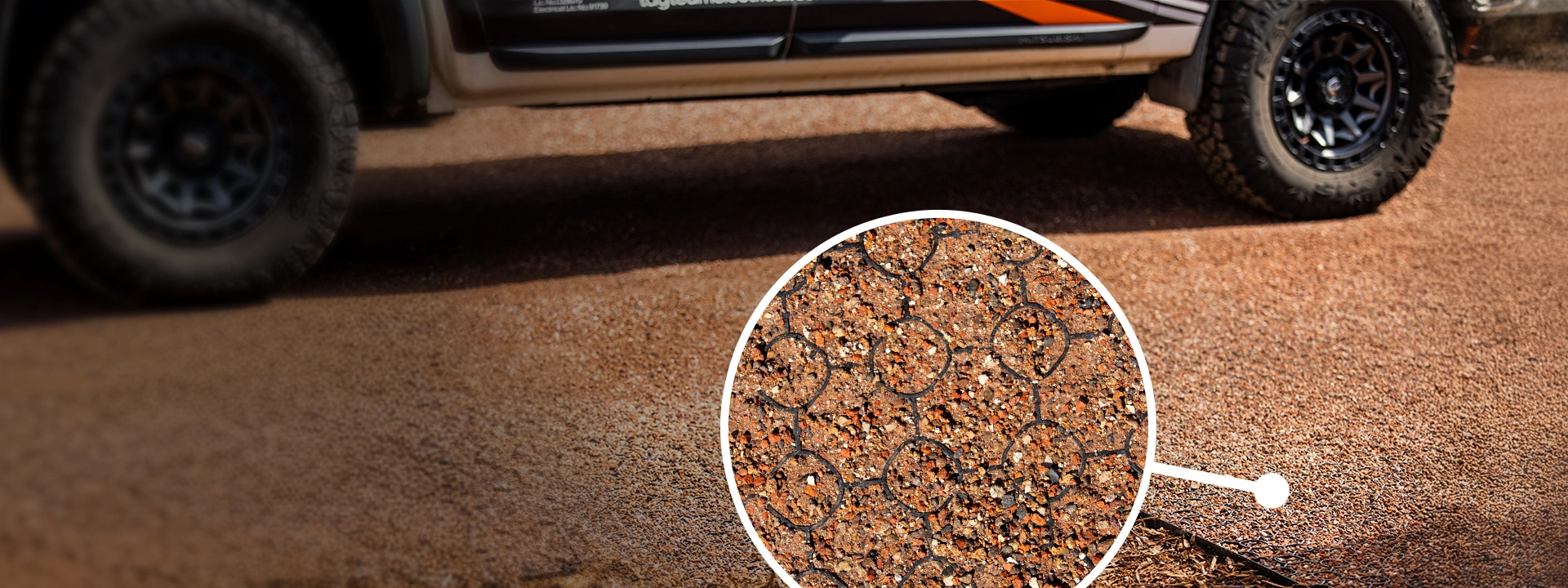
The Trex Ground Stabilisation System provides a load-bearing surface that prevents bogging under heavy vehicle traffic.
2. Vegetative and Biological Controls (Rehabilitation)
Vegetative controls focus on using root reinforcement to stabilise the soil naturally. This is the preferred method for land rehabilitation and batters where long-term environmental integration and aesthetics are the goal.
However, vegetation needs a “head start” to prevent the seed and topsoil from washing away before it germinates. This is where Coir Mesh becomes essential. Made from 100% biodegradable coconut fibre, Coir Mesh protects the bare soil surface and slows water flow, allowing plants to grow through the matting. It provides the mechanical anchoring needed to hold the bank together while root systems take over. Over time, the mesh breaks down and enriches the soil, leaving a fully established green zone.
Chemical methods such as grout injection soil stabilisation are also used on reactive or saturated ground where surface treatments aren't enough. These techniques inject stabilising compounds directly into the subsoil, reinforcing the load-bearing capacity from below.
Product-Based Solutions for Active Sites
On a busy site, you don't have time for “wait and see” solutions. You need products that work from day one to keep the project moving.
- For High-Flow Areas: Use cement-based blankets to create an impermeable, hard-wearing surface that resists heavy rain cycles and prevents gully formation.
- For High-Traffic Zones: Implement the Trex Ground Stabilisation System (TrexPave or TrexLok) to create a permeable, stable hardstand that manages weight without the need for full concrete slabs.
- For Slopes and Batters: Implement coir mesh, jute matting, or coir logs to trap sediment, reduce runoff velocity, and encourage natural growth.
- For Site Access: Ensure vehicle entry points are gravelled, and sediment fences are installed downslope of all disturbed areas to keep mud off public roads.
- For Drainage Lines: Use check dams or rock-filled gabions to dissipate energy in high-velocity water channels.
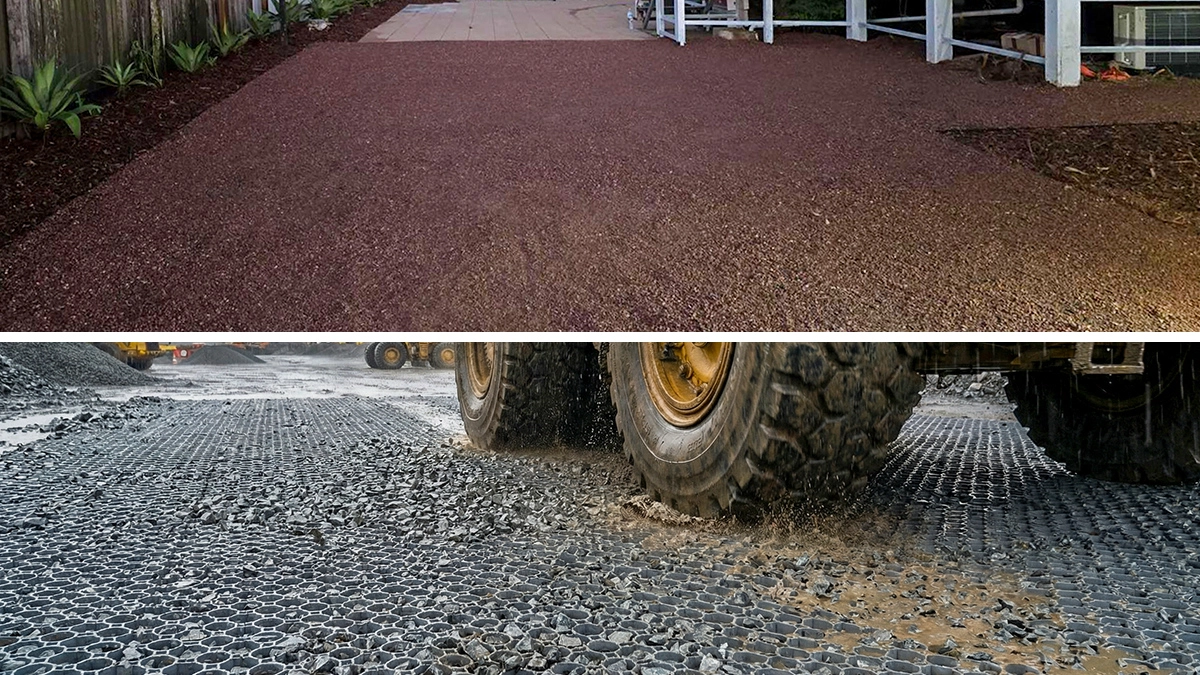
Ground stabilisation solutions in use on active construction sites, supporting heavy equipment loads without surface failure.
Partner with the Experts
With over 30 years of experience supporting the Australian construction industry, Form Direct provides more than just supplies. We offer end-to-end support, from estimating and scheduling to on-site problem-solving. Whether you are managing a large-scale civil project or a residential build, our team ensures you have the reliable stock and technical guidance needed to keep your site stable and compliant.

