
You have no items in your shopping cart.
Key Features to Consider
-
Size: The size and weight of a power trowel affect performance and manoeuvrability. Common machine sizes include 24”, 30”, 34”, 36”, 40”, 46”, and 48”.
24" and 30" machines are ideal for small areas such as garages, sheds, driveways, and edging. 36" and 40" machines suit larger slabs used in houses, factories, and commercial spaces. -
Engine Size & Horsepower: Engine size does not increase blade RPM. Higher horsepower improves load handling, especially when using pans on wet concrete. Typical blade speed ranges from 85–140 RPM.
-
Blade Configuration & Control: Power trowels feature various blade configurations to suit different applications . Walk-behind models may have 1–2 blades, while ride-on machines may have 8. Pitch and speed control systems determine surface precision and finish quality.
-
Durability & Safety Features: Look for reinforced guards, heavy-duty steel chassis, emergency stop switches, engine shut-offs, and easy access to maintenance points. Machines with available parts and accessories reduce downtime and support long-term use.
Walk-Behind vs Ride-On Power Trowels
| Feature | Walk-Behind Power Trowel | Ride-On Power Trowel |
|---|---|---|
| Operation Style | The operator walks behind and manually steers | Operator sits on machine, steering via levers/joysticks |
| Typical Area Size | Small–medium areas (up to 3,000 sq ft) | Large open slabs (3,000+ sq ft) |
| Maneuverability | High, effective around corners and columns | Limited in tight spaces |
| Finish Quality | Good for small jobs | Superior mirror-like finish |
| Operator Fatigue | Higher – manual pushing | Low – seated operation |
| Productivity | Moderate (100–200 m²/hr) | 5x faster than walk-behind |
| Engine Size | 5–10 hp | 15–30 hp |
| Purchase & Rental Cost | Lower | Higher investment |
| Best Use Case | Residential, detail work, edges | Warehouses, industrial slabs, commercial projects |
Walk-Behind Power Trowels
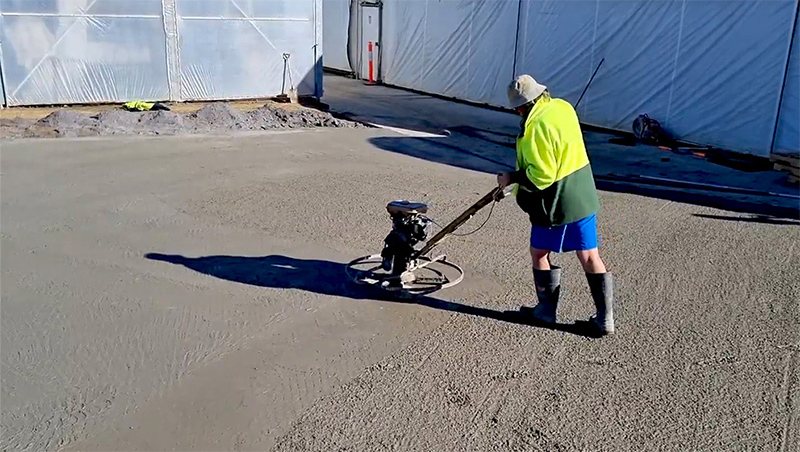
Walk-behind Power Trowel
Walk-behind power trowels are ideal for smaller projects or areas with limited space. They are lightweight, compact, and easy to maneuver, making them suitable for finishing concrete slabs, sidewalks, and other narrow areas. Walk-behind trowels come with one or two blades, and some models feature adjustable pitch control for greater precision.
Ride-On Power Trowels
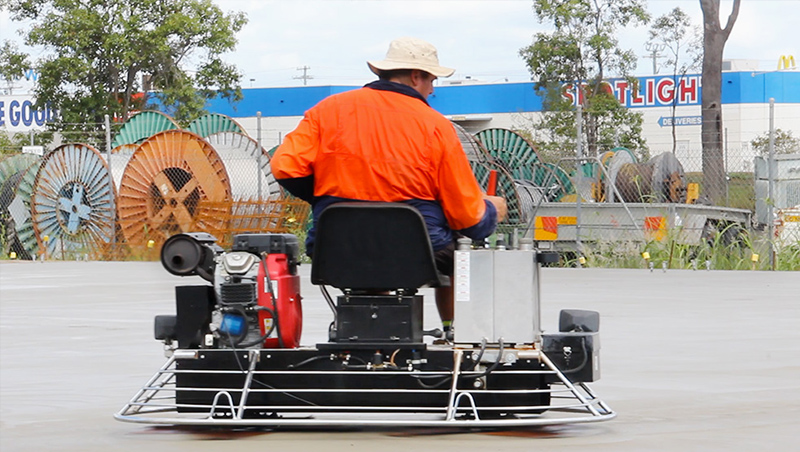
Two types of self-leveling power trowel machine with gas engine have wheels with pads, plate and he is driving it in circles smoothing surface on concrete slab.
Ride-on power trowels are designed for larger areas, such as warehouse floors, airports, and parking lots. They feature larger engines, wider blades, and heavier weight, allowing them to handle heavier workloads and achieve a smooth finish over a large area. Ride-on trowels come with up to eight blades and offer greater speed control and automatic pitch adjustment features.
Choosing the Right Power Trowel Machine for Your Business
Assessing Your Needs
Consider slab size, finish requirements, and frequency of use. This determines machine diameter, engine size, and whether walk-behind or ride-on is required.
Setting a Budget
Machines range from a few hundred to several thousand dollars. Higher-quality units may reduce long-term maintenance costs. Choose based on project volume and expected lifespan.
Consider Maintenance & Repair
Select machines with easily accessible parts, strong dealer support, and warranty coverage. Proper servicing helps extend machine life and optimise performance.
Investing in the Right Power Trowel Machine
To achieve a high-quality concrete finish, choose the machine best suited to your workload, slab conditions, and finish expectations. Ensuring proper use, maintenance, and manufacturer-recommended servicing will maximise durability and project outcomes.
Explore the right power trowel machines to match your project size and finish requirements.

